EPA potential
Zone 1
Predicted average indoor screening level above 4 pCi/L — the highest-potential category.
Moore County Radon · Homebuyer guide
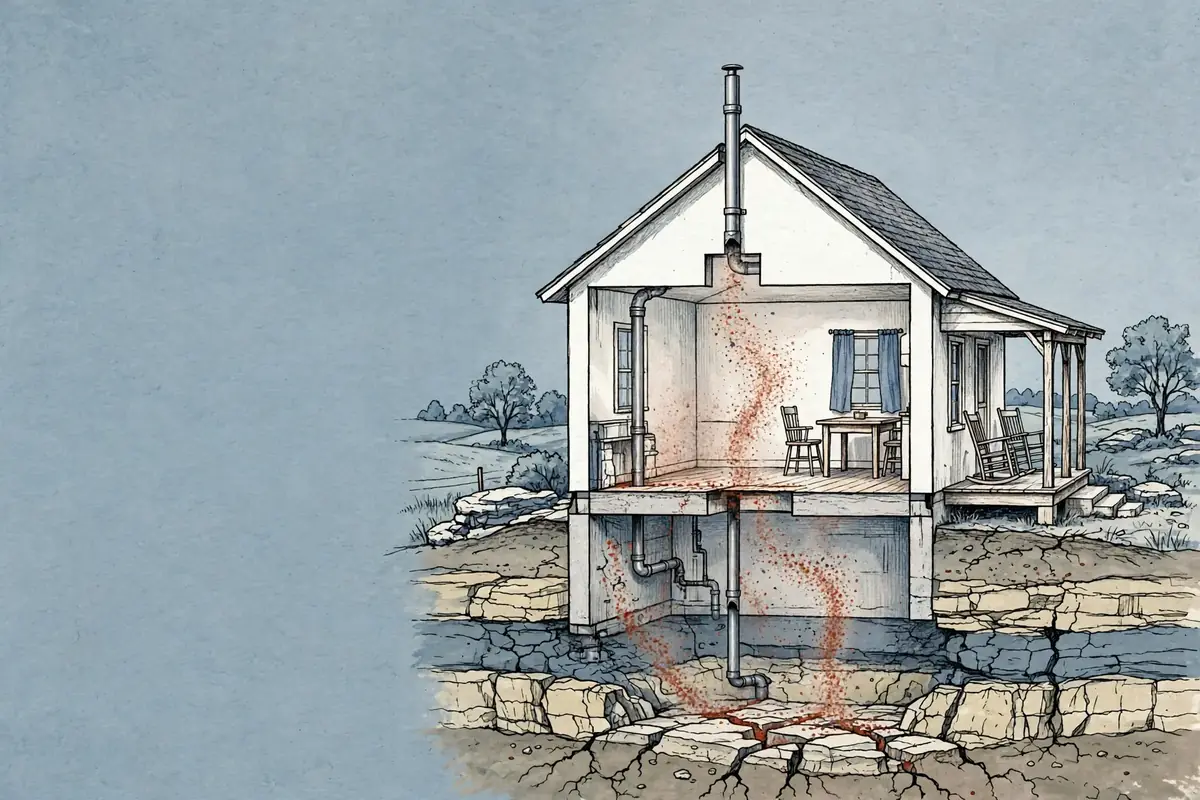
Moore County has the EPA’s highest radon-potential designation, yet its local radon-construction rules cannot be confirmed from public records online. The practical answer for buyers is simpler: test the house.
State test figures that couldn't be confirmed on repeat checks aren't shown here. A missing figure doesn't mean radon is absent; test your home to know its level.
EPA zone: Zone 1Region: Middle TennesseeState test data: State test figures couldn't be confirmed, so they aren't shown
Yes, it can be. Moore County is in EPA Zone 1, the highest radon-potential category, where the predicted average indoor screening level is above 4 pCi/L. Levels vary from house to house, so a test is the only way to know your home's level.
Not confirmed. The Metropolitan Government of Lynchburg, Moore County runs a permit office, but its code edition and appendix list aren't published. Local code details
Order a free short-term kit from the Tennessee Radon Program online or by calling 1-800-232-1139. Place it on the lowest lived-in floor, about 3 feet off the floor, for 3 to 5 days, then mail it back right away. How to test your home
EPA recommends fixing your home if radon is 4 pCi/L or higher, and considering a fix between 2 and 4 pCi/L. Confirm a high short-term result with a second test first. What your result means
Tennessee doesn't license radon professionals, so look for NRPP or NRSB certification. Search both national directories by ZIP code; certified professionals often serve Moore County from nearby cities. How to choose a radon professional
Predicted average indoor screening level above 4 pCi/L — the highest-potential category.
County tooltip values were not publishable after the live dashboard became unavailable.
Lynchburg and Moore County operate as a consolidated metropolitan government.
New construction is a small slice of the market; existing homes dominate buyer decisions.
EPA’s zone map describes regional potential, not the reading in any one building. Every home can test high or low regardless of zone; a short-term test is the decision-grade evidence.
Highest potential. Moore County’s designation is independently corroborated by the EPA map, City-Data’s Tennessee zone table, and RadonResources.
Publication decision: no Moore County average, median, maximum, test count, or percentage is stated here.
Building codes
Lynchburg’s boundaries coincide with Moore County. There is no separate city-versus-unincorporated split to analyze.
The Metropolitan Government of Lynchburg, Moore County has a Building Permits–Planning department. FY2024 records show $72,640 in building-permit revenue. The office’s public page does not state a code edition or appendix list.
Public sources did not establish the adopted IRC edition, ordinance or resolution number, effective date, appendix list, or whether the metro government is locally exempt from — or opted out of — state residential enforcement.
Tennessee’s state rules exclude optional provisions. The IRC radon provisions are appendices: Appendix F in the 2018 IRC and Appendix AF in the 2021 IRC. That means the statewide residential standard does not by itself require radon-resistant construction. A named local adoption could — but none was verified.
Ask which code editions are enforced; whether the IRC radon appendix (F, AF, or BE) is adopted; the adoption instrument and effective date; and whether Metro Lynchburg/Moore holds a Local Government Residential Exemption Authorization or has a current opt-out resolution.
Building Permits–Planning
241 Main St #201, Lynchburg
931-759-7068 · Tue/Wed/Fri, 8 AM–3 PM
This is an absence-of-evidence finding, not proof that no unpublished policy exists. A local records request would be definitive.
Tennessee law encourages school districts to operate indoor-air-quality programs that include radon. A 2018 bill proposed mandatory annual inspections, but later legislative language still describes the program as encouraged.
Tennessee does not require a radon test or a radon-specific disclosure. Sellers still have a general duty to disclose known material defects, and the state disclosure form advises buyers to use inspection contingencies that include radon.
Tennessee is not on EPA’s list of states with a radon credentialing program. For consumers, national NRPP or NRSB certification is therefore a meaningful qualification to ask about.
Tennessee doesn't license radon testers or mitigators, so national certification is the best way to check qualifications. The Tennessee Radon Program points residents to two directories: search them by ZIP code and widen the radius if nothing is listed nearby.
We don't recommend or rank companies. Before you hire, check the certification number in the directory yourself and ask for a follow-up test after any system is installed. Questions to ask a radon professional.
For buyers and owners
Radon testing resources
Free kits, live help, credential directories, and the action thresholds that turn a reading into a decision.
Retest on a schedule: Retest at least every 2 years if you have a mitigation system, and after renovations or changes to how you use the lowest floor.
Hotlines and action guidance: EPA and CDC. Health figures and course: American Lung Association.
Links below are the public sources used for this evidence brief. Where the research session could not complete a live check, the limitation is stated in the page.
Research completed Oct. 16, 2026 UTC. This page is a dated evidence snapshot, not a live feed. Open questions remain open by design rather than being filled with estimates.