Tennessee Radon Authority
Updated October 17, 2026

Marshall County, Tennessee · researched Oct. 14, 2026

Marshall County Radon

Marshall County, TN radon Zone 1 risk.
Zero radon-code coverage.

Every Marshall County jurisdiction is on the 2018 residential code, yet none has adopted its radon appendix. In a fast-growing county with almost no local test data, the safest conclusion is simple: test the house, not the county average.

Bottom line for buyers New construction in Lewisburg, Chapel Hill, Cornersville, and unincorporated Marshall County is not required by local code to include radon-resistant features.

Radon in Marshall County, Tennessee: quick answers

EPA zone: Zone 1Region: Middle TennesseeState test data: State test figures confirmed on repeat checks

Is radon a problem in Marshall County, Tennessee?

Yes, it can be. Marshall County is in EPA Zone 1, the highest radon-potential category, where the predicted average indoor screening level is above 4 pCi/L. Levels vary from house to house, so a test is the only way to know your home's level.

Do new homes in Marshall County, TN have to be built radon-resistant?

No. Unincorporated Marshall County, Lewisburg, Chapel Hill and Cornersville all adopt the 2018 code without the radon appendix. Local code details

How do I test my home for radon in Marshall County?

Order a free short-term kit from the Tennessee Radon Program online or by calling 1-800-232-1139. Place it on the lowest lived-in floor, about 3 feet off the floor, for 3 to 5 days, then mail it back right away. How to test your home

What radon level means I should fix my home?

EPA recommends fixing your home if radon is 4 pCi/L or higher, and considering a fix between 2 and 4 pCi/L. Confirm a high short-term result with a second test first. What your result means

Who can test or fix radon in Marshall County?

Tennessee doesn't license radon professionals, so look for NRPP or NRSB certification. Search both national directories by ZIP code; certified professionals often serve Marshall County from nearby cities. How to choose a radon professional

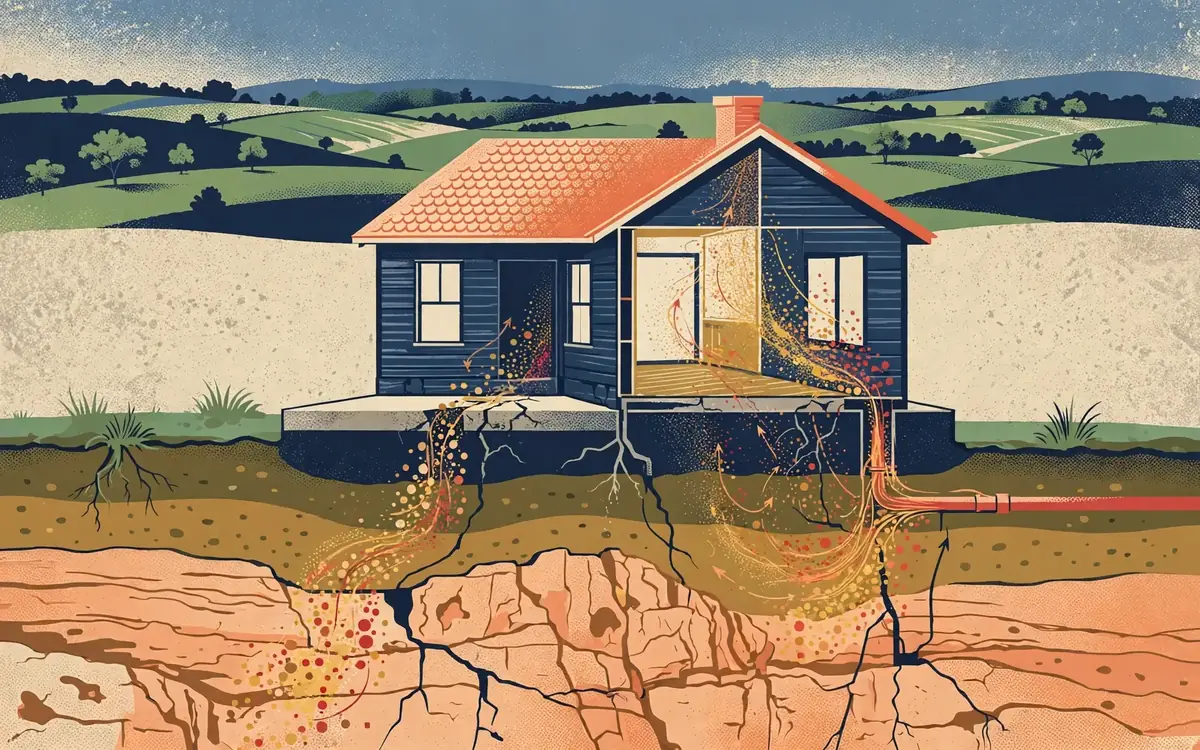
Illustrated cutaway of a Tennessee home showing radon rising from soil through foundation openings
Radon can enter through slab cracks, joints, sumps, and utility openings.Illustration · not a measured home
4 of 4
jurisdictions without Appendix F
County, Lewisburg, Chapel Hill, Cornersville
1
EPA radon zone
Highest predicted potential
0
certified pros based in-county
NRPP measurement listings
+10.9%
population growth
April 2020 to July 2025 estimate

“Built to code” does not mean “built radon-resistant.”

All four jurisdictions adopt the 2018 IRC without its optional radon appendix. That leaves radon-resistant new construction optional, even though Marshall County is mapped in EPA Zone 1.

Test every home — including a brand-new one.

01 · Building codes

One county. Four jurisdictions. The same missing safeguard.

No ordinance reviewed lists Appendix F, the 2018 IRC’s Radon Control Methods appendix. Local code therefore does not make radon-resistant construction mandatory.

Unincorporated Marshall County

RRNC optional
Code
2018 IRC
Appendix F
Not listed as adopted
Adoption record
Resolution number and effective date not published online

The county’s adopted-codes page lists editions but no appendices. Confirm the underlying resolution with Building Codes & Zoning.

Lewisburg

RRNC optional
Code
2018 IRC, codified
Authority
§12-501; Ord. #19-11, Jan. 2020
Modifications
Fire-sprinkler provisions only; no appendix list

The MTAS code includes a rolling administrative-update clause. A newer edition could have been adopted by regulation; confirm the currently enforced edition with the building inspector.

Chapel Hill

RRNC optional
Code
2018 IRC
Authority
§12-101; Ord. #2020-21, Feb. 2020
Appendix F
Not adopted

Title 12 adopts the 2018 code family and modifies energy and sprinkler rules; it does not adopt the radon appendix.

Cornersville

RRNC optional
Code
2018 IRC
Authority
§12-201; Ord. #22-280, Sept. 2022
Adopted appendix
Appendix Q (tiny houses), not Appendix F

Title 12 incorporates state residential standards and explicitly includes Appendix Q. Optional or recommended provisions are not construed as adopted.


02 · Risk signal

The dashboard shows 0.9. The sample size does not.

The Tennessee dashboard’s Marshall County tooltip was live-checked on Oct. 14, 2026. Average, median, and maximum all display 0.9 pCi/L — but the workbook does not show a county test count.

0.9
pCi/L displayed average
Average0.9
Median0.9
Maximum0.9

Do not treat this as a robust county baseline.

Three identical values suggest one test or a very small sample, but the exact count cannot be confirmed because the dashboard does not expose it.

The accompanying pre- and post-mitigation band charts are labeled by health region. When Marshall County is selected, they show the South Central Region — not Marshall County alone.

EPA still classifies Marshall County as Zone 1: predicted average indoor screening levels above 4 pCi/L. A zone is a planning signal, not a diagnosis of any address.

Tennessee Radon Testing dashboard · EPA Map of Radon Zones

How do I find a certified radon professional in Marshall County?

Tennessee doesn't license radon testers or mitigators, so national certification is the best way to check qualifications. The Tennessee Radon Program points residents to two directories: search them by ZIP code and widen the radius if nothing is listed nearby.

We don't recommend or rank companies. Before you hire, check the certification number in the directory yourself and ask for a follow-up test after any system is installed. Questions to ask a radon professional.


03 · Buyer brief

Five things to carry into a Marshall County purchase.

  1. Test the specific home.County zones and thin averages cannot tell you what is happening under one slab or crawlspace.
  2. Test new construction too.No jurisdiction in the county requires the 2018 IRC radon appendix.
  3. Use an inspection contingency.Tennessee’s disclosure form asks what the seller actually knows; “Unknown” is an allowed answer, and the seller is not required to research or test.
  4. Verify professional credentials.Use the NRPP or NRSB directory, recognizing that the nearest providers may travel from outside the county.
  5. Request a free kit if you own the home.TDEC’s statewide radon program offers free test kits to Tennessee homeowners.

04 · Take action

Radon testing resources

Use these Tennessee and national resources to get a test, talk through a result, or find qualified help.

Test your home

If your result comes back high

  • 1-800-644-6999 — the Fix-It Hotline, for general guidance on lowering radon in your home

Learn more

Hotline information: U.S. Environmental Protection Agency and Centers for Disease Control and Prevention.


Primary references

Code records and live directory/dashboard checks were reviewed Oct. 14, 2026. Links below lead to the source sites used for the claims above.