Tennessee Radon Authority
Updated October 17, 2026
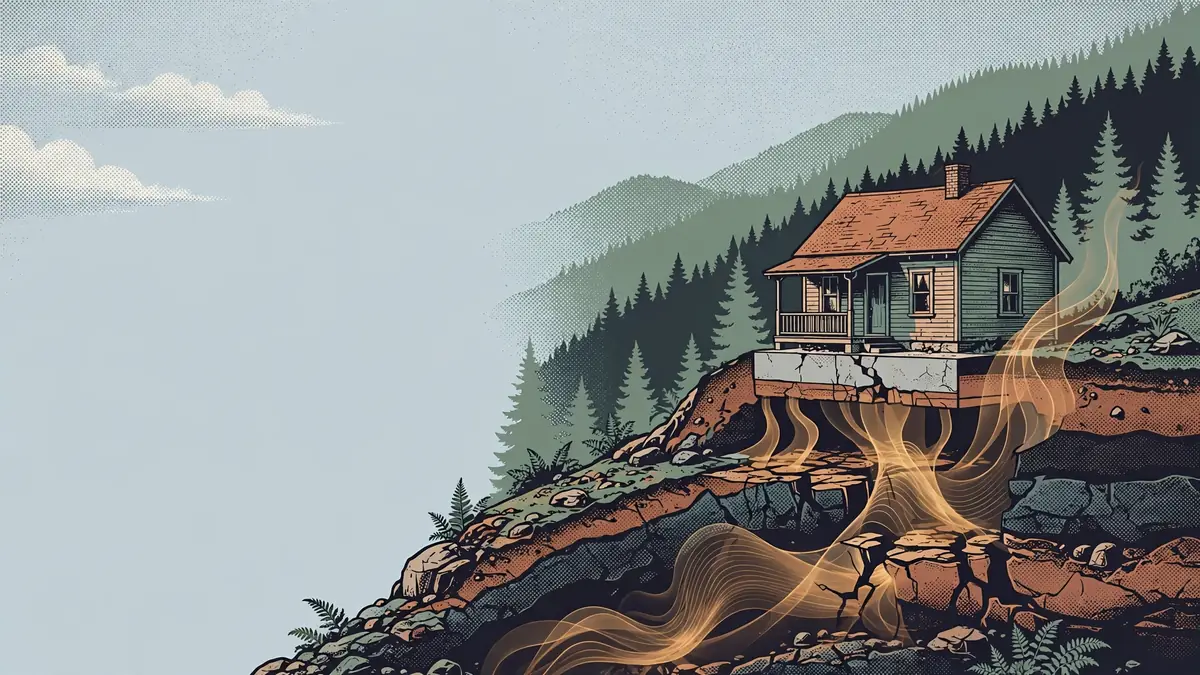
Illustrated Appalachian home with radon rising through rocky ground beneath its foundation

Campbell County, Tennessee · Radon guide

Campbell County, TN radon Zone 3 on paper. Elevated homes in the data.

Campbell County’s official risk label looks low. Its state dashboard readings, uneven code coverage, and lack of locally based certified testers tell a more complicated story.

Sources checked October 16, 2026

Radon in Campbell County, Tennessee: quick answers

EPA zone: Zone 3Region: East TennesseeState test data: State test figures seen once; shown with a caveat

Is radon a problem in Campbell County, Tennessee?

It can be. Campbell County is in EPA Zone 3, the lowest predicted radon-potential category (below 2 pCi/L on average). Homes with high radon are still found in Zone 3, and the Tennessee Radon Program has found homes needing action in every Tennessee county, so test to know your home's level.

Do new homes in Campbell County, TN have to be built radon-resistant?

Not clearly anywhere. No countywide requirement was found. Jellico's code adopts a range of appendices that includes radon, but it's unclear whether officials enforce it as mandatory. Local code details

How do I test my home for radon in Campbell County?

Order a free short-term kit from the Tennessee Radon Program online or by calling 1-800-232-1139. Place it on the lowest lived-in floor, about 3 feet off the floor, for 3 to 5 days, then mail it back right away. How to test your home

What radon level means I should fix my home?

EPA recommends fixing your home if radon is 4 pCi/L or higher, and considering a fix between 2 and 4 pCi/L. Confirm a high short-term result with a second test first. What your result means

Who can test or fix radon in Campbell County?

Tennessee doesn't license radon professionals, so look for NRPP or NRSB certification. Search both national directories by ZIP code; certified professionals often serve Campbell County from nearby cities. How to choose a radon professional

01 · Risk profile

“Low potential” is not a pass.

EPA places Campbell County in Zone 3, its lowest predicted-potential category. EPA also says the zone map should not decide whether an individual home gets tested: elevated levels occur in every zone.6

3.7pCi/L average

The Tennessee Radon Testing dashboard showed this county average for the 2022–2023 “All” view—just under EPA’s 4.0 pCi/L action level.5

0.8pCi/L median
7.2pCi/L maximum
Read carefully: these three Campbell County values came from one tooltip whose county label was confirmed. Later hover attempts landed on neighboring counties, so the figures are published with a single-read caveat. The dashboard’s pre/post charts are health-region aggregates, not county counts, and are not used here.5
02 · Building codes

Three towns, three different code stories.

No countywide radon-resistant-new-construction mandate was verified. Jellico is the important exception to watch: its appendix range includes radon, but the documents do not settle whether officials enforce it as mandatory.

Open question

Jellico

2021 IRC · Appendices AA–AW

Section 12-301 adopts the 2021 IRC “including Appendix Chapters AA through AW,” a range that contains Appendix AF, Radon Control Methods.1 But AF says its provisions are not mandatory unless specifically referenced and apply where radon-resistant construction is required. The published documents leave enforcement ambiguous.4

No IRC chapter found

LaFollette

2018 IBC · No residential-code chapter

Title 12 adopts building, plumbing, electrical, fuel-gas, and energy codes, but contains no IRC chapter and no radon appendix. Whether state residential enforcement applies inside the city was not verified.2

No radon appendix listed

Jacksboro

2015 IRC · No appendix list

The published code adopts the 2015 IRC but names no appendices, so its Appendix F radon provisions are not adopted by that text. The MTAS copy appears dated and should be checked with the town recorder before relying on it as current.3

How do I find a certified radon professional in Campbell County?

Tennessee doesn't license radon testers or mitigators, so national certification is the best way to check qualifications. The Tennessee Radon Program points residents to two directories: search them by ZIP code and widen the radius if nothing is listed nearby.

We don't recommend or rank companies. Before you hire, check the certification number in the directory yourself and ask for a follow-up test after any system is installed. Questions to ask a radon professional.

03 · For homebuyers

Test the house, not the map.

Nothing Campbell-County-specific was found for disclosure or transaction rules. The useful local guidance comes from the contrast between Zone 3, the measured maximum, and incomplete construction-code coverage.

Test every home

EPA’s zone map predicts broad potential; it does not measure a specific house. Campbell County’s recorded 7.2 pCi/L maximum is evidence that elevated homes exist here.56

Ask new-build questions

Do not assume a new home includes passive radon features. Ask the builder about a gas-permeable layer, sealed slab penetrations, vent piping, and whether the home was tested after completion.

Verify credentials

Because the credentialed supply is drive-in, confirm the tester’s active NRPP or NRSB listing and ask whether the company also sells mitigation before hiring.910