Average pCi/L
Verified twice in the Fayette County tooltip on the 2022–2023 Tennessee dashboard.
Fayette County Radon · Tennessee
Fayette County’s low-potential label does not clear any individual house. The state dashboard’s verified county average sits above 2 pCi/L, and local radon-code adoption remains unconfirmed.
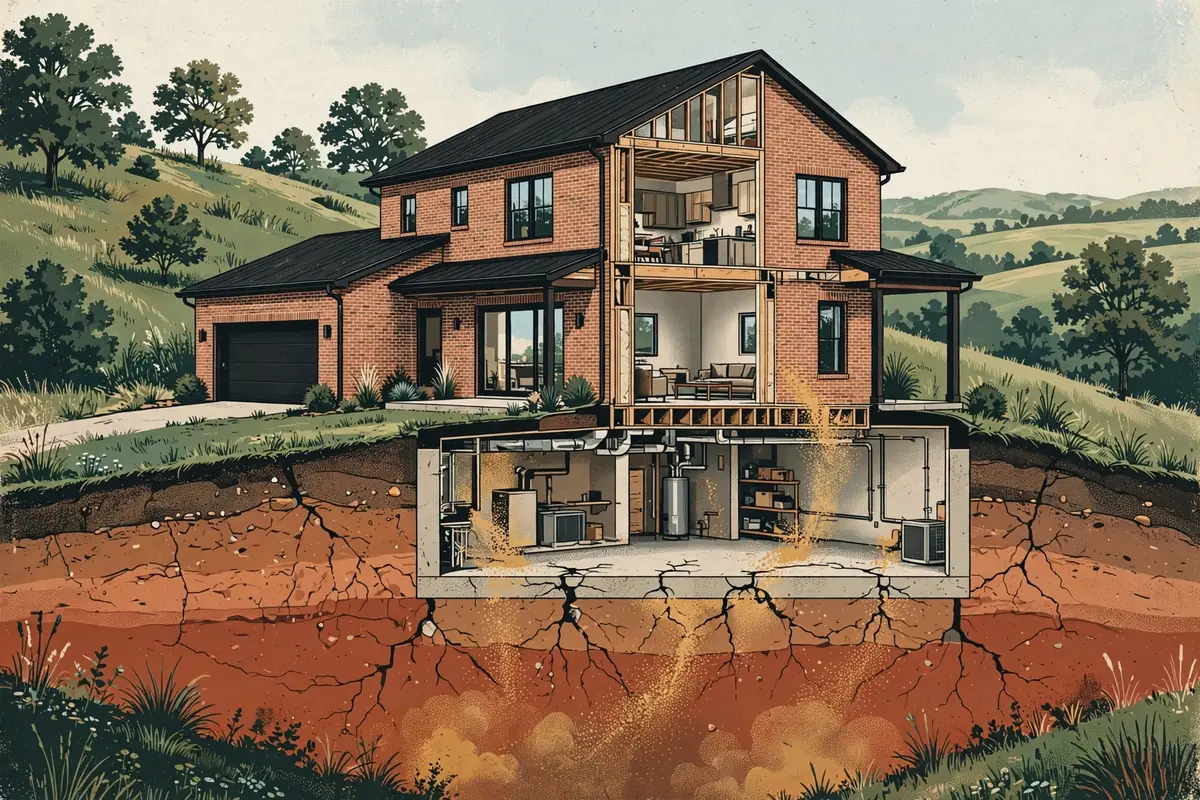
EPA zone: Zone 3Region: West TennesseeState test data: State test figures confirmed on repeat checks
It can be. Fayette County is in EPA Zone 3, the lowest predicted radon-potential category (below 2 pCi/L on average). Homes with high radon are still found in Zone 3, and the Tennessee Radon Program has found homes needing action in every Tennessee county, so test to know your home's level.
No local requirement was confirmed. Williston follows the state's 2018 code without the radon appendix, and the appendix lists for unincorporated Fayette County, Oakland and Somerville couldn't be read online. Local code details
Order a free short-term kit from the Tennessee Radon Program online or by calling 1-800-232-1139. Place it on the lowest lived-in floor, about 3 feet off the floor, for 3 to 5 days, then mail it back right away. How to test your home
EPA recommends fixing your home if radon is 4 pCi/L or higher, and considering a fix between 2 and 4 pCi/L. Confirm a high short-term result with a second test first. What your result means
Tennessee doesn't license radon professionals, so look for NRPP or NRSB certification. Search both national directories by ZIP code; certified professionals often serve Fayette County from nearby cities. How to choose a radon professional
The bottom line
EPA places Fayette County in Zone 3, where predicted average indoor radon is below 2 pCi/L. Yet the Tennessee dashboard reported a 2.3 pCi/L county average and a 1.3 median. Those figures describe submitted tests, not the next house on the block.
Verified twice in the Fayette County tooltip on the 2022–2023 Tennessee dashboard.
Also verified twice. The maximum could not be read and is withheld.
No NRPP-listed measurement professional was found in Fayette County.
Risk profile
The EPA map estimates potential. The Tennessee dashboard summarizes submitted test events. Neither predicts a specific house.
Zone 3 means low predicted potential, with average indoor levels projected below 2 pCi/L. EPA cautions that its map is for resource planning and building-code decisions—not for deciding whether a home should be tested.
On two separate loads checked October 16, 2026, the tooltip identified “County: Fayette” and showed a 2.3 pCi/L average and a 1.3 pCi/L median. The maximum did not render clearly and is not published here.
Selecting Fayette County filters the pre- and post-mitigation charts to “West Region,” not to the county itself. They cannot support a Fayette County test count or percentage above 4 pCi/L. The dashboard also does not state whether the tooltip summary combines pre- and post-mitigation results.
Building codes
The county, Oakland, Somerville, and Williston do not all follow the same enforcement path. Missing appendix records matter.
Appendix F states that it is not mandatory unless an adopting ordinance specifically references it. Fayette County is also Zone 3; the appendix’s county table covers Zone 1 jurisdictions.
State adopted-code history ↗ · State code-enforcement notice ↗ · 2018 IRC Appendix F ↗
No county or municipal requirement surfaced for public buildings, schools, or real-estate transactions. Tennessee’s radon program is voluntary, and no Fayette County school-district testing policy was found. An unpublished policy could still exist.
For homebuyers
No Fayette County point-of-sale mandate was found. Tennessee’s disclosure form suggests a radon inspection contingency rather than requiring a current test.
The Tennessee disclosure form says buyers should consider a radon inspection contingency and makes clear that seller disclosures do not replace inspections.
No local radon-resistant construction mandate was confirmed. Tennessee’s disclosure exemptions include new construction sold with a written warranty.
Request the permit jurisdiction, adopted code and appendix list, then ask whether a gas-permeable layer, vent pipe and fan-ready electrical provision were included.
TDEC offers free radon test kits to Tennessee homeowners. The report’s state contact is TDEC.Radon@tn.gov or (615) 785-3289.
Housing context
Fayette County’s expanding housing stock makes new-construction testing especially important where code requirements remain uncertain.
Up 8.0% from the 2020 Census count of 41,990.
A substantial flow of new homes entering a market without a confirmed local radon mandate.
Housing investment raises the value of catching a correctable indoor-air issue.
Free homeowner kits can reach a large share of the county’s residents.
Tennessee doesn't license radon testers or mitigators, so national certification is the best way to check qualifications. The Tennessee Radon Program points residents to two directories: search them by ZIP code and widen the radius if nothing is listed nearby.
We don't recommend or rank companies. Before you hire, check the certification number in the directory yourself and ask for a follow-up test after any system is installed. Questions to ask a radon professional.
Answers in brief
Research trail
Dashboard, jurisdiction and professional-directory observations were checked October 16, 2026. Every unresolved record is identified above.